Brigid's Greetings to you - and Bridget's too!
Ireland got a new Public Holiday 3 years ago - the first Monday in February and called St. Bridget's Day. It was introduced to honour the spiritual and cultural significance of St. Bridget, a woman of great historical importance, as well as the resonance and symbolism of the Celtic Goddess Brigid.
Brigid is alive with resonance and symbolism: a patron of hospitality, the goddess of poetry and storytelling, the bringer of springtime and new beginnings (Imbolc), and the sacred custodian of place. She also embodies a profound and timeless model of feminine leadership, one rooted in wisdom, care, creativity, and resilience.
Bridget is a strong name in my own family, carried by my grandmother, aunt, and several cousins. My daughter, too, bears it as her second name though, for now, she finds it terribly old-fashioned and a touch embarrassing! In time, I hope she’ll come to see its strength and take inspiration from it.
As for me, I'd love the Spirit of Brigid’s spirit to guide me forward this spring - I'm really feeling the need for renewal this year! I wish her guidance for you too.
This is a newsy newsletter - the New Year started a month late for me after an extended Christmas holiday and a bout of flu so I'm making up for it here! Our monthly article is chunky and full of insight as I look back on the evolution of sustainable tourism and what's shaping the future. There's a handy Leadership Brief and some information on various accredited training programmes underway and wrapping up at present.
If any of this sparks a thought, I’d love to hear from you. And if you find value in this newsletter, please feel free to share it with others who might enjoy it.
Wishing you a wonderful month ahead.
Beannachtaí Bríde ort!


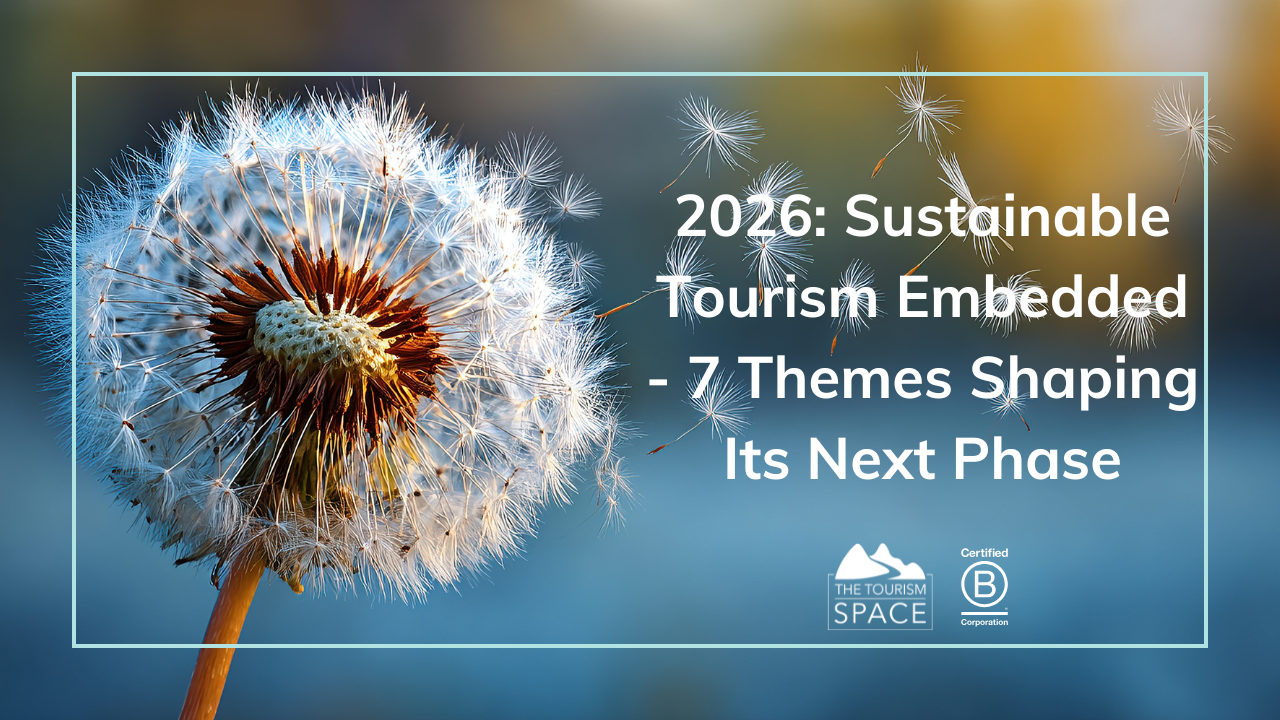
2026: Sustainable Tourism Embedded and 7 Themes Shaping Its Next Phase
Over the past few years, there’s been a gradual shift relating to ‘sustainable tourism’. It’s no longer the thing we’re trying to convince people to care about. In many parts of the system, it has slowly become the baseline. It shows up in funding criteria, in policy language, in what’s considered “good practice”, and in the kinds of questions being asked at approval stage.
Sustainable tourism is no longer sitting at the edge of the conversation. In many contexts, it’s now the starting point, the assumed baseline, the thing that doesn’t need to be explained quite so loudly anymore.
This month’s article explores that shift through seven themes we see shaping the next phase of tourism practice – from trust and evidence, to place, supply chains and collective action – and explores what this shift means for destinations and the people leading them.