
Why Tourism Matters: The Power of Awe and the Human Need to Travel
I was reading Ethan Kross’s Chatter recently. The book explores the steady stream of inner talk that can narrow our attention and make life feel smaller than it really is. One section in particular on the topic if 'awe' caught my attention. It reminded me of times when I had experienced awe myself and the inner shift that followed. It also made me think about why people travel, the connection between travel and awe and what tourism truly contributes to the world.
Awe: A Quiet Reset for the Human Mind
Kross describes awe as a psychological state that opens people up. Awe expands attention, softens self-focus and creates a feeling of being connected to something larger. Research by psychologists Dacher Keltner and Jonathan Haidt shows that awe works by widening perceptual and emotional scale, reducing rumination and supporting openness and groundedness.
In essence, awe does a few important things at once:
-
it opens perspective
-
it creates a constructive sense of smallness
-
it interrupts inner chatter
-
it invites connection
-
it deepens meaning
The heart of it is simple. Awe widens the frame. It shifts people out of the tightness of daily life and into a more spacious sense of being in the world.
Two Moments of Awe
Two memories surfaced as I read that chapter.
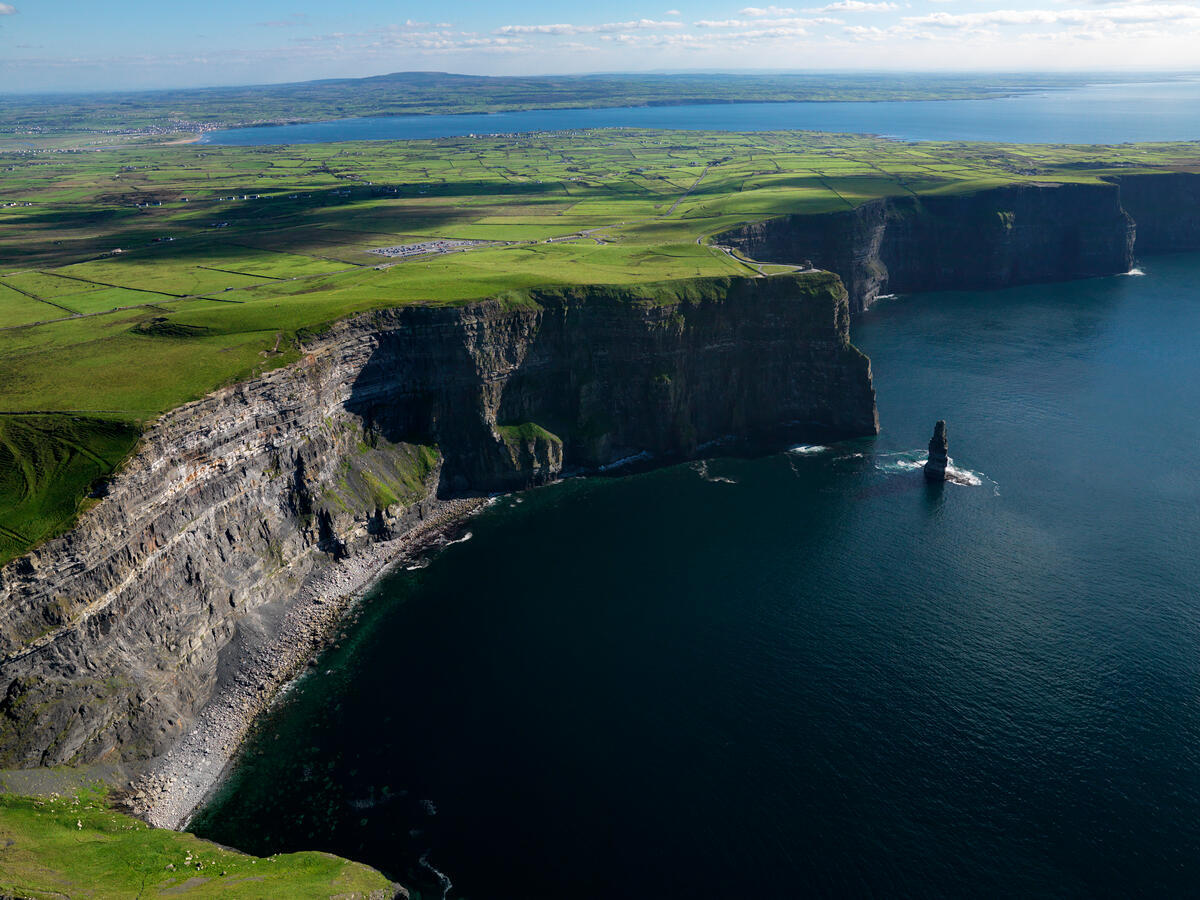
The first was at the Cliffs of Moher when I was nine - my first ever time 'sightseeing'. I remember how the Cliffs came into sight - the height, the sound, the sweep of the Atlantic - and it felt like the air had literally swept from my body. Even i my child's mind, I realised that the world was far bigger than I had known. It was exhilarating and grounding at once.
The second was quieter. Many years later on a Lisbon city food tour, we were walking through a narrow residential street and could hear two older women chatting busily across open windows above us, flitting in and out from their kitchens to their balconies to keep the chat going. It was an ordinary moment, that was both private and public at the same time. I marveled at the lifestyle of open houses across the street. I felt connected to everyday life in a way that was different from my own and familiar at the same time.
Two very different settings – one dramatic, one domestic. Both created a shift in me.
Awe Is Not the Exception - It Is Part of Why People Travel
Kross notes that awe is as likely to appear in quiet, everyday moments as it is in dramatic landscapes, once we have the space and context to notice. This aligns closely with what we see in tourism. Travel exposes people to new settings, different rhythms, heritage, culture, landscape and human creativity. It interrupts routine, creates space and heightens awareness.
These conditions make awe more likely. In their synthesis of awe research, Keltner and Haidt note that awe most reliably emerges most readily in environments that are novel, meaningful or perceptually rich i.e. exactly what travel provides.
Many people may not describe what they seek as "awe," yet the outcomes they hope for - clarity, connection, perspective, meaning - are essentially awe outcomes.
When viewed through the lens of awe, the enduring human need to travel makes even more sense.
The Human Need to Travel
Travel is often framed merely as leisure, although its roots go much deeper. Human beings have always travelled - to learn, to trade, to understand, to connect, to reset. Movement has always played a role in how people situate themselves in the world.
Travel responds to enduring human needs: for perspective, for connection, for meaning, for context and for a pause in routine. It stretches understanding, opens identity and reconnects people with both difference and similarity. It helps people situate themselves in the wider world.
Why Tourism Matters - More Than We Commonly Measure
Tourism is frequently (usually) described through economic metrics: revenue, jobs, visitor numbers, and occupancy. These matter and deserve utmost attention. Tourism is an economic sector with a powerful economic impact.
Yet when tourism is viewed only economically, something essential gets lost. The sector also makes a social, cultural and psychological contribution that is out of the reach of most other sectors and is also harder to measure. Tourism helps people feel part of a broader human story. It strengthens the connection to place. It supports human well-being and a social perspective.
Tourism matters because it creates the conditions for awe, and awe has proven personal and social benefits.
Research by Piff, Dietze and colleagues shows that awe increases pro-social behaviour, while studies by Bai, Maruskin and others link awe with emotional regulation and enhanced wellbeing
Awe (and Tourism) as a Zoom Out Button
A simple way to understand awe is to imagine pressing a Zoom Out Button. Suddenly, the frame expands and more of the picture comes into view. Travel also acts like a Zoom Out Button. It does not change reality; it simply widens what people can see.
Travel interrupts the close-up of daily life. It places people in new environments, stories and landscapes where perspective can naturally widen. Awe often follows - sometimes quietly, sometimes dramatically - and with it comes a renewed sense of connection, scale and possibility.
Tourism’s Contribution to Personal and Social Well-being
When awe widens the frame, several things tend to follow:
-
people feel more grounded
-
perspective becomes clearer
-
empathy increases
-
connection strengthens
A growing body of research, including work by Stellar, Gordon, Keltner and others, links awe with pro-social behaviour, expanded thinking and increased wellbeing. Tourism does not manufacture these outcomes. It creates the conditions in which they are more likely to arise.
A Closing Reflection
Awe can be dramatic or quiet. It can arrive through landscapes or laneways. What matters is the shift it creates - in perspective, in connection, in meaning.
Tourism creates space for awe. It widens the frame of people's lives and lived experience. It strengthens connection to place and to one another. It helps people feel grounded in a wider world.
This is why tourism matters beyond economics alone. It's why travel endures. It's also why tourism’s deeper contribution deserves recognition, resourcing and (dare I say it) measurement.
